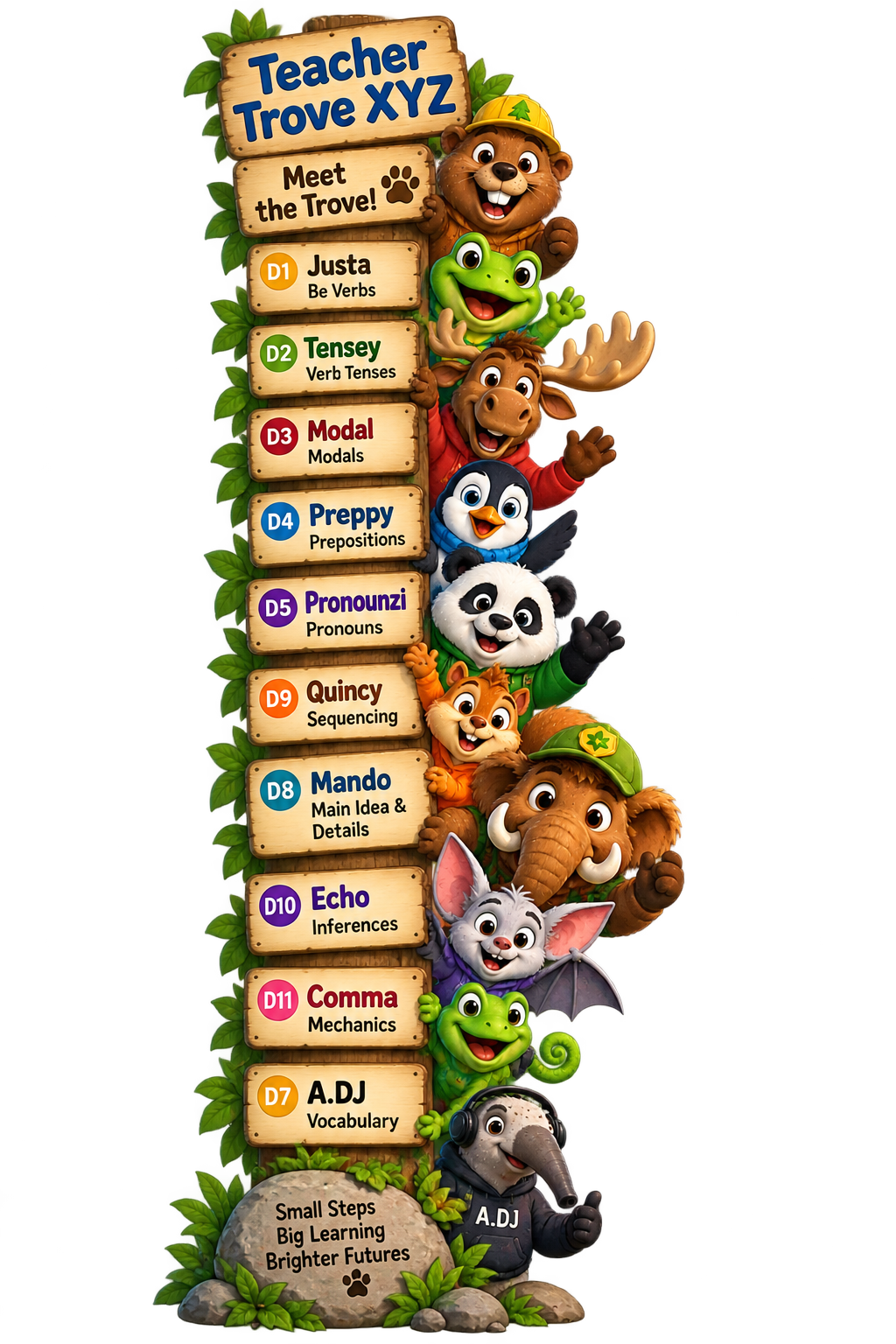
Tablet-first learning, adaptive worksheets, and classroom-tested activities designed for ESL classrooms.

Domain Structure and Taxonomy

A structured framework for adaptive ESL instruction, diagnostic feedback, and classroom activity design.
At TeacherTrove.XYZ, we have found it helpful to organize English language learning into instructional domains because:
  • domains provide a clear structure for lesson design and targeted instruction
  • meaningful activities often support multiple language domains simultaneously
  • domain-based instruction supports differentiation for diverse learners
  • instructional domains help teachers identify strengths, gaps, and learning priorities
  • domain organization supports research-informed teaching practices and adaptive learning design
Rather than treating language learning as a single generalized skill, domains allow teachers to focus on specific competencies while still recognizing the interconnected nature of authentic communication.
This framework also helps connect classroom activities, assessment data, and instructional decision-making in a way that is practical for both teachers and learners.

🟥 Grammar and Usage

These domains focus on helping students communicate clearly and accurately through strong grammatical foundations. Learners develop confidence using correct verb forms, sentence patterns, and language structures that support both spoken and written communication.
They include activities focused on:
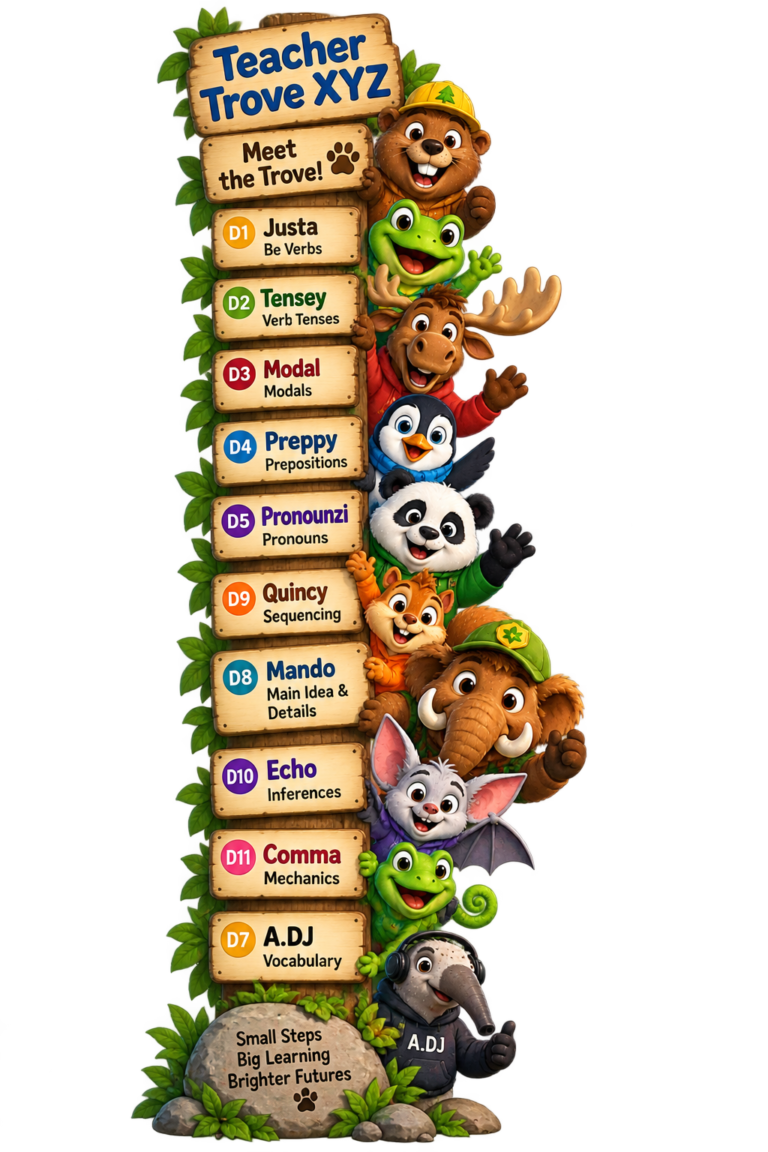
🟥 Subject-Verb Agreement (D1)
Ensuring verbs correctly match singular and plural subjects in clear, grammatically accurate sentences.
🟥 Verb Tense Consistency (D2)
Maintaining logical and consistent verb tense usage across sentences and connected ideas.
🟥 Modal & Auxiliary Verbs (D3)
Using helping verbs and modal expressions to communicate ability, possibility, obligation, and tone.
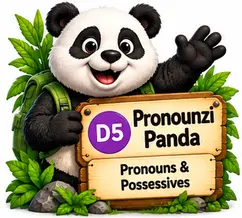
🟥 Pronouns & Possessives (D5)
Correctly using pronouns and possessive forms to improve clarity and avoid repetition.

🟧 Mechanics and Structure

These domains help students build clearer, more organized sentences. Learners practice how English sentences are structured, how ideas connect, and how grammar mechanics support communication.
This category focuses on:
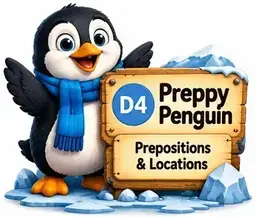
🟧 Prepositions & Locations (D4)
Understanding spatial relationships, movement, and positional language.
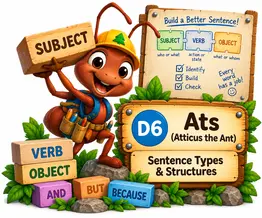
🟧 Sentence Structure (D6)
Building complete, organized, and increasingly complex sentences.
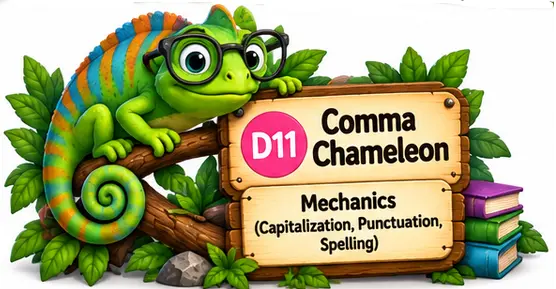
🟧 Grammar Mechanics (D11)
Using punctuation, capitalization, and written conventions accurately.

🟫 Organization and Sequence

These domains support students in connecting ideas logically and communicating information in a clear, organized way. Learners practice sequencing, transitions, and practical communication patterns used in both academic and real-world situations with a focus on:
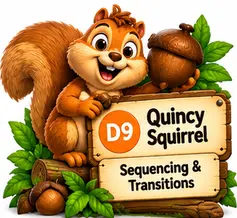
🟫 Sequencing & Transition (D9)
Connecting ideas logically using sequence words, transitions, and organizational structures.
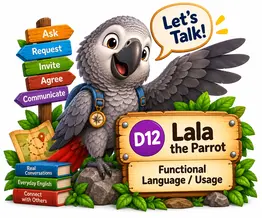
🟫 Functional Language (D12)
Using practical language patterns for real-world communication, classroom interaction, and social situations.

🟩 Vocabulary

These domains help students build flexible vocabulary knowledge through context, reading, and meaningful language use. Learners strengthen comprehension and communication by developing a deeper understanding of how words function in different situations.
The activities in this domain are centered on:
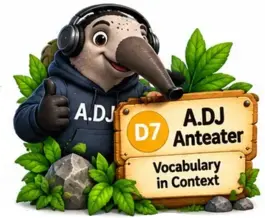
🟩 Vocabulary in Context (D7)
Determining and applying word meaning based on surrounding language and context clues.

🟦 Reading Comprehension

These domains focus on helping students understand and interpret written texts. Learners practice identifying key ideas, recognizing supporting details, and developing stronger comprehension strategies across a variety of reading tasks.
In this domain, the student will encounter activities anchored in:
🟦 Main Ideas & Details (D8)
Identifying central ideas and supporting details in passages, stories, and informational texts.
These domains encourage students to think critically about language and meaning. Learners practice making predictions, drawing conclusions, and interpreting implied ideas using evidence, reasoning, and contextual understanding. 
The purpose of these activities is to have the student:
🟪 Inference & Prediction (D10)
Use evidence and context clues to draw conclusions, make predictions, and interpret implied meaning.
Â